
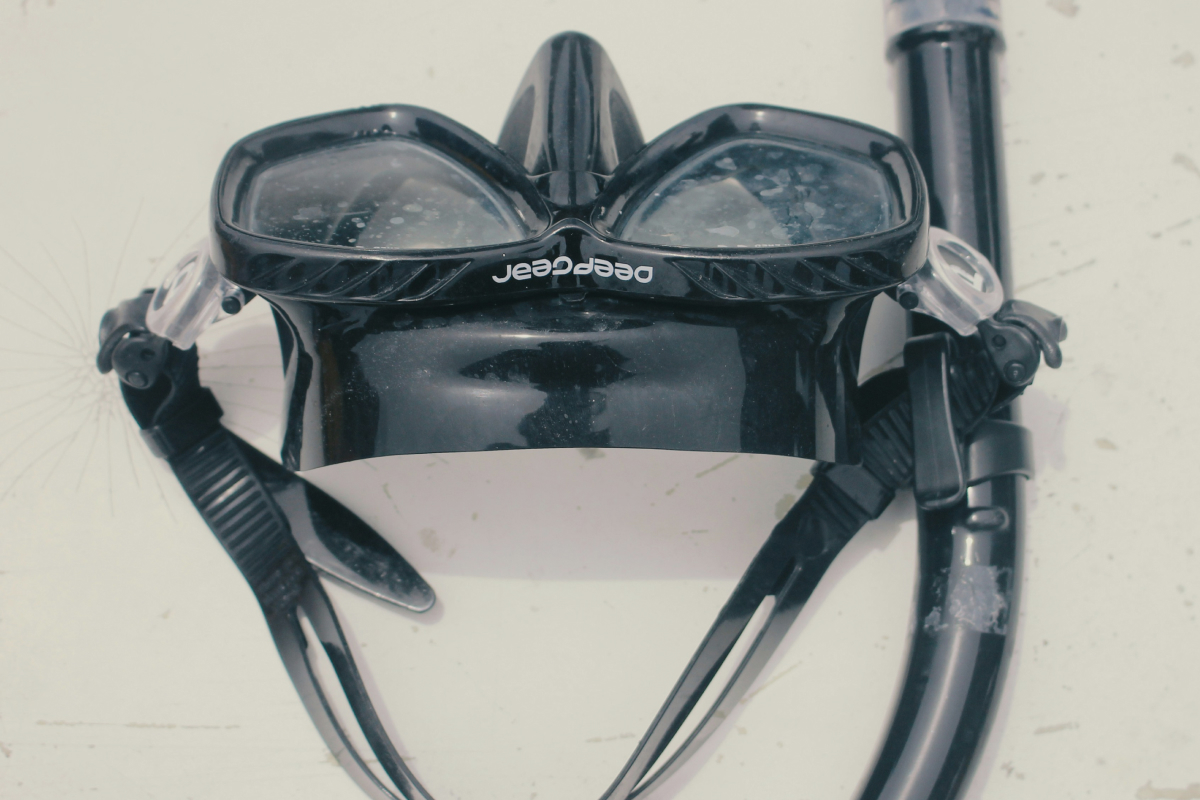
Licence: Unsplash License (free photo, including commercial use)
Your buddy points towards something on the reef. Everyone else seems to have spotted it, but you are still trying to work out which patch of coral they mean. A little later, you bring your dive computer closer and closer before the numbers come into focus.
If either situation sounds familiar, it may be time to look at the vision correction you use while diving. Seeing marine life clearly is part of the enjoyment, but so is being able to read your instruments without a struggle.
Buying a prescription diving mask in Singapore involves more than choosing a familiar brand and selecting a lens power. The mask needs to fit your face, the lenses need to suit your requirements, and the complete setup should be comfortable to use throughout a dive. Here is what to consider before making your purchase.
Start with what you need to see clearly
Think about where you have difficulty. Is it recognising your buddy from a distance, picking out detail on the reef, or reading your pressure gauge and dive computer? Explain these situations when discussing your options.
Distance correction and help with close-up reading are different requirements. Some divers need one; others need both. Standard replacement lenses and custom prescription solutions also offer different levels of correction. A current assessment from your optometrist will help establish what you need, particularly if your usual glasses no longer feel quite right.
Bring your prescription when enquiring, and have the appropriate physical lens powers confirmed before ordering. Do not choose a stronger lens simply because it is available, or rely on a general internet rule for converting your spectacle prescription into a mask-lens order.
Choose a comfortable mask before committing to the lenses
A suitable optical lens cannot compensate for a mask that leaks or presses against your face. Start with the fit of the mask itself, keeping lens compatibility in mind as you narrow down your choices.
Hold the mask gently against your face with the strap out of the way, then inhale lightly through your nose. If it holds with a light seal, that is a useful initial check. Look for an even fit around the skirt and notice any pressure around your nose or forehead. This dry check is a starting point, rather than a guarantee of how the mask will feel throughout a dive.
Try the mask with a regulator mouthpiece where possible, as your mouth position can affect the seal. Check that you can comfortably pinch your nose and look down towards your instruments. Take your time comparing shapes. A mask that fits your dive buddy beautifully may feel quite different on you.
For a wider look at equipment fit, read our guide to choosing the right fit for fins, masks and wetsuits.
Check that the mask accepts the lenses you need
Optical lenses are made for particular mask systems. A lens from one model should not be assumed to fit another, even when the masks look similar or come from the same brand.
Confirm the exact mask model, the compatible lens range and whether your required powers are available. Do this before buying a mask on the assumption that you can add prescription lenses later.
The Scubapro Zoom is one option to consider at Dive Box. It is a dual-lens mask with a lens-change system designed to work without tools, and the product listing provides separate selections for the left and right optical lenses. This gives you a practical starting point for discussing the complete mask and lens combination.
If you already own a mask, bring its exact model name when making an enquiry. A photograph may help identify it, but compatibility should be confirmed before replacement lenses are ordered.
Check the left and right lens selections separately
Do not assume that both eyes need the same correction. When a product page has separate left and right selections, review each one carefully and confirm that the order reflects the intended setup.
The Scubapro Zoom listing at Dive Box describes negative optical lens options from -1.0 to -9.0 in 0.5-dioptre steps. Confirm your selected powers and their availability before purchasing, as a listed range does not guarantee that every individual option will be ready for your departure date.
Keep the order details alongside your mask model information once the purchase is complete. If a lens needs replacing later, you will have a clear record to refer to. It is much easier than trying to remember the lens powers halfway through planning another trip.
Ask about astigmatism and more complex prescriptions
An off-the-shelf lens with a single power does not automatically reproduce every part of a spectacle prescription. If you have astigmatism, a strong prescription or more complex correction needs, ask your optometrist whether a standard option will provide suitable vision.
Custom prescription mask solutions exist, but their availability, compatibility and ordering process differ from standard replacement lenses. Confirm what can actually be supplied before buying the mask. Treat the lens selection and the mask purchase as one decision rather than discovering a mismatch after the frame has arrived.
Remember to check your close-up vision
Being able to see the reef clearly does not necessarily mean your dive computer will be comfortable to read. During your enquiry, explain if the main difficulty is focusing on the small information displayed near your wrist or on a gauge.
Dive Box lists the Scubapro Mask Bi-Focus Lens, with positive options for the left and right sides and compatibility stated for Scubapro Zoom and Fino masks. Ask whether this lens design suits your particular near-vision requirement and how it will work alongside any distance correction you need.
Bring your own dive computer when assessing the completed mask if practical. Look at it from your usual reading position, rather than only testing large text across a room. Our guide on how to read a dive computer also explains the information you will want to identify comfortably underwater.
Compare the cost of the complete setup
When comparing prices, establish what the displayed amount includes. A base mask price may be separate from the optical lenses, and a lens listing may require you to select the left and right sides individually.
Ask for the total price of the mask with your chosen lenses, including any applicable fitting or assembly charges. Also confirm whether the mask will arrive assembled or whether further work is needed before use. These details matter more than a small difference between headline prices.
It is worth asking about future replacement lenses at the same time. Find out whether they can be ordered separately and check the applicable return terms before committing to a prescription configuration. This gives you a clearer picture of the purchase beyond the first checkout.
Give yourself time before your next dive trip
Leaving a prescription mask purchase until the evening before departure creates unnecessary pressure. Even when the mask is available, your chosen lens combination may need to be confirmed or ordered.
Contact Dive Box with your intended model, confirmed lens requirements and travel date. If you want to assess the fit in person, check that the model is available to view before making the trip down. An online listing does not always mean the same item is on display in the showroom.
Once you have the completed mask, check the vision through both lenses and spend time getting familiar with its fit and adjustments. Arrange an appropriate controlled-water opportunity to try it before relying on it during a dive holiday. Discovering a comfort issue early gives you time to address it.
Look after the lenses according to their instructions
Ask how to prepare and clean the exact lenses you have purchased. Lens materials, coatings and fitted optical systems can have different care requirements, so avoid assuming that advice for another mask will apply to yours.
Rinse the mask with fresh water after use, let it dry and store it in a protective case away from heat and direct sunlight. Use a compatible defog treatment as directed. Check before using abrasive cleaners or any heat-based preparation method, particularly on a new optical setup.
Keep your glasses accessible for before and after the dive, too. Your prescription mask is useful in the water, but you will still want a comfortable way to see while sorting equipment, moving around the boat and travelling home.
Choose a setup that suits your eyes and your diving
The most useful prescription diving mask is one that combines a comfortable seal with suitable vision correction. Take the time to establish both, then confirm the lens compatibility, complete cost and availability before ordering.
If you are considering the Scubapro Zoom or compatible Bi-Focus lenses, contact Dive Box to discuss the equipment options and what is available for your trip. With the right mask and lenses sorted, you can spend more of the dive enjoying what is in front of you.