

(Photo credit: Bechtold, 2018)
Introduction
Physical fitness and diving performance are more closely linked than many divers realise. For all divers, developing a targeted approach to breath control and air consumption can translate directly into better, safer, and more enjoyable dives. This guide covers what you need to know about breath control and air consumption and how to build it effectively.
Why Breath Control And Air Consumption Matters for Divers
Diving places unique demands on the body. Unlike most sports, it requires a combination of physical endurance, fine motor control, and mental calm — all performed under conditions where your breathing and buoyancy must be precisely managed. Breath Control and Air Consumption addresses some of the most common performance gaps divers experience. Improving in this area doesn't just make you a better diver — it also reduces fatigue, lowers the risk of injury, and helps you get more out of each dive session.
The Science Behind It
Understanding the physiology behind breath control and air consumption helps you train more effectively. When you're physically well-conditioned, your body uses oxygen more efficiently — meaning you consume air more slowly and can stay at depth longer. Your cardiovascular system recovers faster between dives, which is especially important on liveaboard trips or multi-dive days. Muscular conditioning reduces the energy cost of swimming against currents, while flexibility and joint mobility help you achieve and maintain streamlined positions underwater.
Practical Training Tips
You don't need to become an athlete to benefit from targeted fitness training for diving. Consistency matters more than intensity, especially when you're just starting out. Incorporate exercises that build breath control and air consumption into your existing routine three to four times per week. Focus on functional movements — those that mimic what your body does in the water — rather than isolated gym exercises. Pool sessions are particularly valuable, as they let you apply your fitness gains directly to your diving technique in a controlled environment.
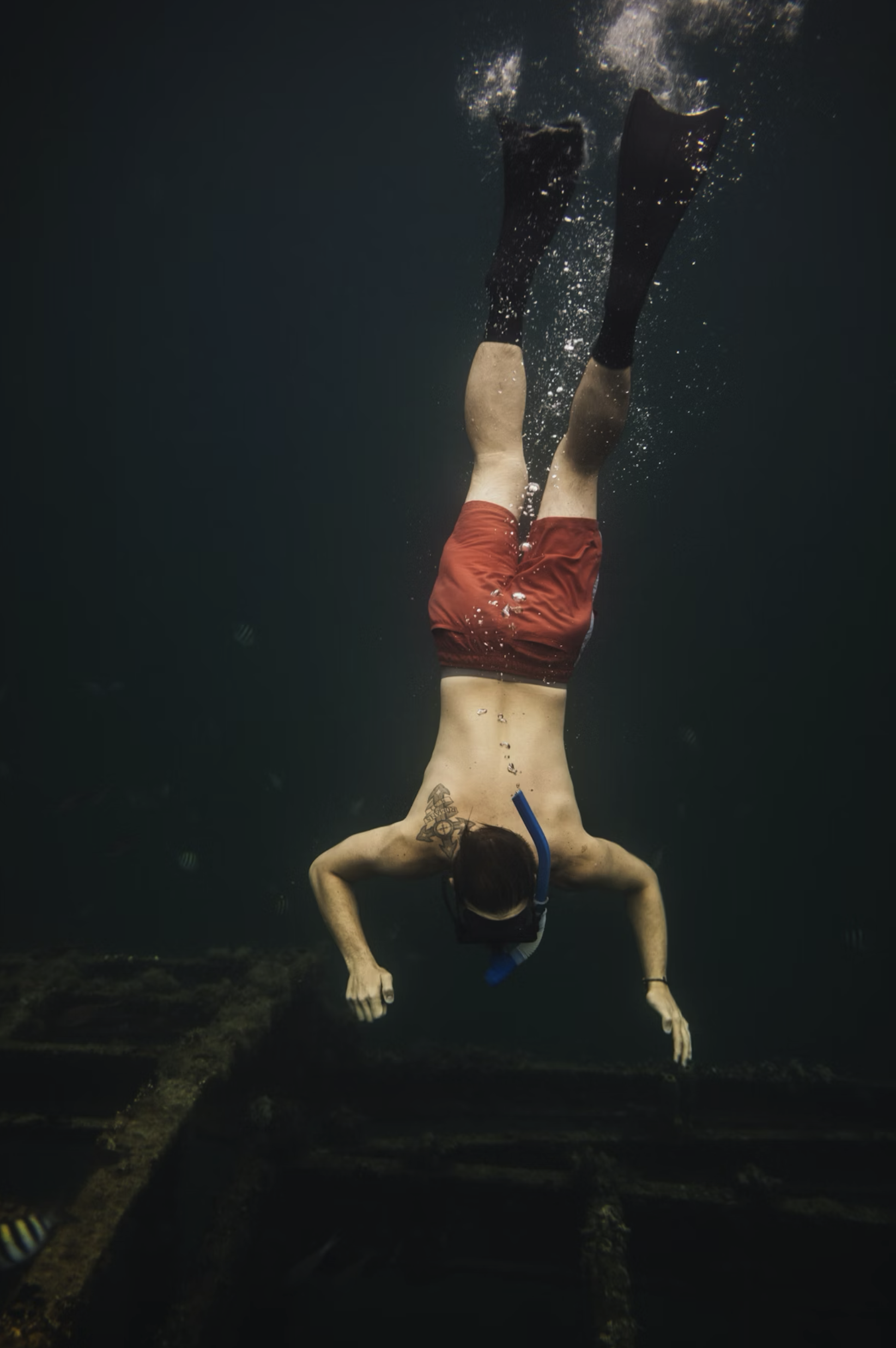
(Photo credit: Arnold, 2023 — via Unsplash)
Common Mistakes to Avoid
Many divers either ignore fitness altogether or train in ways that don't transfer well to the water. Overtraining before a dive trip is one common mistake — arriving exhausted means you'll be fighting fatigue on every dive rather than enjoying the experience. Another mistake is neglecting recovery: sleep, hydration, and nutrition all play a role in how well your body performs and adapts. If you're unsure where to start, speak with one of our Dive Box staff who can recommend a training approach suited to your current level.
Conclusion
Investing time in breath control and air consumption is one of the highest-return decisions a diver can make. The improvements you see in the water — longer bottom times, calmer breathing, better control — will remind you why it's worth the effort every time you descend. The Dive Box team is here to support your development as a diver, both above and below the surface.