
 (Huum, 2025)
If you're serious about scuba diving, you already know that performance underwater starts long before you enter the water. Fitness, breathing, hydration, flexibility — every factor matters. But one recovery and performance tool that rarely gets talked about in the scuba diving community is the humble sauna. Whether you're a recreational diver in Singapore looking to improve your next dive trip or a student preparing for your PADI Open Water certification, regular sauna sessions can make a genuine, science-backed difference to how you dive. Here's everything you need to know.
What Does a Sauna Actually Do to Your Body?
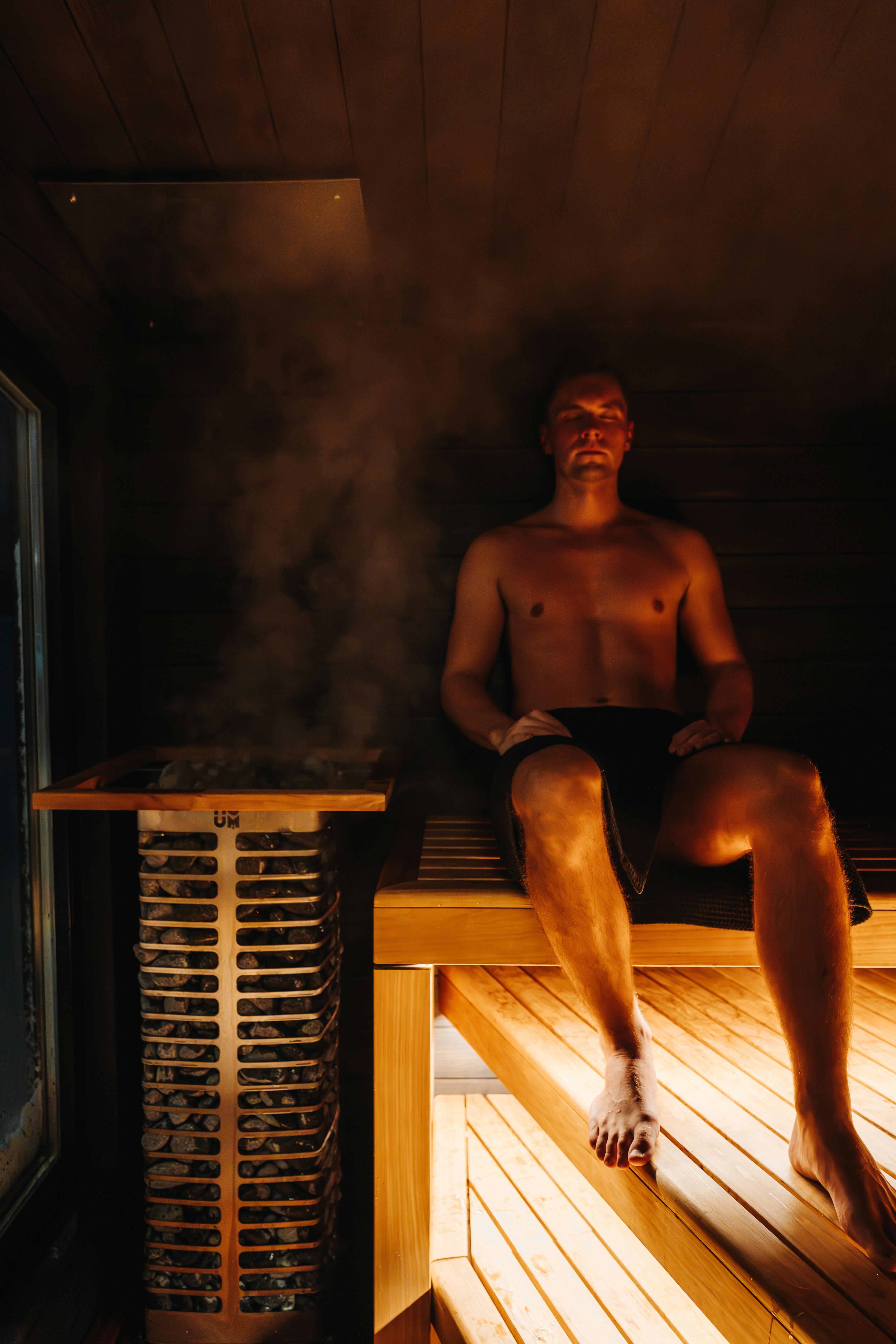
Before we dive into the scuba diving benefits specifically, it helps to understand the basics of what a sauna does physiologically. When you step into a sauna — typically heated to between 80°C and 100°C for a traditional Finnish dry sauna — your body responds to the heat in a series of powerful ways.
1. Improved Cardiovascular Fitness — Dive Longer, Breathe Smarter
Scuba diving is a cardiovascular sport. Even a relaxed recreational dive at 18 metres places real demands on your heart and lungs: you're managing breathing rate, equalisation, buoyancy, and task loading all at once. The fitter your cardiovascular system, the more efficiently you breathe, the longer your tank lasts, and the more comfortable you feel underwater.
This is where the sauna delivers a clear advantage. Regular sauna use has been shown to reduce arterial stiffness by 5–10%, lower systolic blood pressure by up to 6 mmHg, and improve left ventricular ejection fraction — essentially making your heart pump more efficiently. A major long-term Finnish study of over 14 years found that higher frequency of sauna bathing was significantly associated with reduced risk of fatal cardiovascular events, independent of other risk factors.
For scuba divers, this means a stronger, more efficient cardiovascular system to support your dives. Better cardiac output means better oxygen delivery to working muscles, which translates to improved air consumption — one of the most sought-after improvements for any diver.
2. Better Lung Capacity and Breathing Efficiency
Controlled breathing is the foundation of safe scuba diving. Every PADI and SSI instructor will tell you: breathe slowly, breathe deeply, and never hold your breath. A diver with strong, flexible lungs and open airways will naturally breathe more efficiently through a regulator — and sauna use has been shown to directly support respiratory health.
Research published in the World Journal of Advanced Research and Reviews found that sauna therapy improved lung function in patients with obstructive pulmonary conditions, increasing forced expiratory volume, vital capacity, tidal volume, and ventilation. A study from Finland found that regular sauna users were far less likely to suffer from respiratory conditions like pneumonia and chronic lung disease.
For scuba divers, the heat in a sauna relaxes chest muscles, opens airways, and loosens mucus that can restrict breathing depth. Regular sessions 2–4 times per week essentially give your respiratory system a workout — expanding your lung capacity and making every breath through your regulator more comfortable and efficient.
3. Sauna Before Diving: Can It Reduce Decompression Sickness Risk?
This is one of the most fascinating areas of sauna and scuba diving research — and it's backed by peer-reviewed science. A study published in Aviation, Space, and Environmental Medicine found that a single pre-dive sauna session significantly decreased circulating venous gas bubbles after a simulated dive by 27.2% at rest and up to 35.4% after physical exertion.
Decompression sickness (DCS), or "the bends," occurs when dissolved nitrogen in the body's tissues comes out of solution and forms bubbles during or after ascent — a risk every scuba diver manages through controlled ascent rates and safety stops. The study concluded that the sauna's protective effect may involve three mechanisms: sweat-induced dehydration reducing plasma volume and nitrogen uptake, elevated heat shock proteins (HSPs) offering cellular protection, and increased endothelial nitric oxide (NO) production improving vascular function.
Important caveat: This research applies to a pre-dive sauna session, ending at least one hour before the dive. Using a sauna immediately after scuba diving carries a different and increased risk profile entirely — see the section on timing below.
4. Muscle Recovery and Reduced Post-Dive Soreness
A day of scuba diving — suiting up, carrying heavy gear, swimming against currents, and climbing back onto a dive boat — works your muscles harder than many divers realise. This is especially true for multi-dive days on liveaboards or trip-intensive destinations like Sipadan, Tubbataha, or the Similans. Post-dive muscle fatigue and soreness can cut into the quality of your second or third dive of the day.
Regular sauna use is one of the most effective passive tools for muscle recovery. The heat dilates blood vessels, increases blood flow, and accelerates the removal of lactic acid and metabolic waste products from tired muscles. Heat shock proteins triggered by sauna exposure support muscle repair at the cellular level. A study at the University of Jyväskylä found that infrared sauna after exercise prevented decline in jump performance, reduced muscle soreness, and improved perceived recovery.
For scuba divers, this means waking up on day two of a dive trip with less stiffness, more flexible muscles, and better readiness for the next dive. Regular sauna sessions during training — not just on dive trips — build this recovery capacity over time.
5. Heat Acclimatisation for Warm-Water Diving in Southeast Asia
For Singapore-based divers, this benefit is particularly relevant. Most dive destinations accessible from Singapore — Tioman, the Gili Islands, Phuket, Sipadan, Anambas — involve diving in tropical waters at 28°C to 30°C, often in humid, high-heat surface conditions between dives. Heat stress between dives can lead to fatigue, dehydration, and reduced performance on subsequent dives.
Research on athletes and heat acclimation has shown that regular sauna sessions produce significant physiological adaptations: increased plasma volume, improved sweating efficiency, reduced core body temperature during exertion, and lower heart rate at the same workload. One study on runners found that three weeks of post-exercise sauna sessions increased run time to exhaustion by 32% and plasma volume by 7.1%.
For tropical divers, these same adaptations mean your body tolerates heat on the surface more comfortably, sweats more efficiently to cool itself, and stays more energised between dives. If you want to dive better at Sipadan or on a multi-day liveaboard, heat acclimatisation through regular sauna use back home in Singapore is a genuinely effective strategy.
6. Mental Focus, Stress Reduction, and Calmer Dives
Anxiety is one of the most common causes of problems for new scuba divers — and even experienced divers can be affected by pre-dive nerves, especially in challenging conditions like strong currents, low visibility, or new dive sites. Elevated anxiety increases breathing rate, accelerates air consumption, and can impair decision-making underwater.
Regular sauna use has well-documented psychological benefits. Spending time in a sauna reduces cortisol (the body's primary stress hormone), promotes deep mental relaxation, and improves overall mood and mental clarity. A survey of sauna users found the number one reported benefit was relaxation and stress reduction — with the mental benefits extending into improved sleep quality, better focus, and reduced anxiety levels.
For scuba divers, this translates to calmer pre-dive composure, more relaxed breathing underwater, and sharper situational awareness — all of which directly improve dive safety and enjoyment. Divers who manage anxiety well are also less susceptible to nitrogen narcosis, which is exacerbated by fatigue and stress at depth.
7. Better Sleep — The Underrated Dive Performance Factor
Quality sleep is one of the most overlooked aspects of dive preparation. Fatigue before a dive can impair judgement, increase the risk of nitrogen narcosis at depth, and reduce your physical performance underwater. Yet after a long-haul flight to a dive destination, or after a busy liveaboard schedule, quality sleep isn't always guaranteed.
Sauna sessions have been shown to significantly improve sleep quality by raising core body temperature during the session, then triggering a sharp natural drop post-sauna — a drop that closely mirrors the temperature fall that occurs at the onset of deep sleep, promoting melatonin release and deeper sleep cycles. A 2018 study in the Journal of Human Kinetics found that regular sauna bathing improved sleep quality scores by 65% after eight weeks.
For divers preparing for early-morning boat departures or managing recovery on multi-day dive trips, building regular sauna use into your routine at home can meaningfully improve sleep quality, ensuring you arrive at every dive rested, sharp, and ready.
The Critical Rule: Sauna Timing Around Diving
While sauna use offers real benefits for scuba divers, timing is everything — and getting it wrong can be dangerous.
Before diving: A sauna session ending at least 1 hour before your dive can reduce bubble formation and may lower DCS risk, as per the research above. However, you must rehydrate fully between your sauna session and entering the water, as dehydration is itself a risk factor for decompression sickness.
After diving: Avoid saunas (and hot tubs) immediately after scuba diving. Heat speeds circulation and can cause dissolved nitrogen that is still off-gassing from your tissues to come out of solution too rapidly, increasing the risk of DCS. The Divers Alert Network (DAN) recommends avoiding saunas for at least 24 hours after diving, particularly after multiple dives or deeper profiles. At a minimum, wait until you have fully off-gassed — at least 30 minutes for a single shallow dive, and significantly longer for repetitive or deeper dives.
How to Use the Sauna as a Scuba Diver: Practical Tips
Frequency: Aim for 2–4 sessions per week to build lasting physiological adaptations in cardiovascular fitness, lung capacity, and heat tolerance.
Duration: Start with 10–15 minutes per session if you're new to sauna. Build up to 20–30 minutes as your tolerance improves — never exceed 30 minutes in a single sitting.
Temperature: Traditional dry Finnish saunas at 80–100°C are most well-studied. Infrared saunas at lower temperatures (50–65°C) are an effective and more accessible alternative, especially for longer sessions.
Hydration: Always hydrate well before and after every sauna session. Drink at least 500ml of water post-sauna, and include electrolytes if you have multiple sessions in a day. Proper hydration before diving is non-negotiable.
Cool down: Allow your body temperature to return to normal — a cool (not ice-cold) shower is ideal — before heading to sleep or to your next activity.
Medical considerations: If you have heart disease, unstable angina, severe hypertension, or any serious cardiovascular or respiratory conditions, consult your doctor before using a sauna. The same fitness-to-dive standards that apply to scuba diving apply here.
Conclusion
The connection between sauna use and scuba diving performance is more scientifically grounded than most divers realise. From improved cardiovascular efficiency and lung capacity, to pre-dive bubble reduction, faster muscle recovery, heat acclimatisation, mental calm, and better sleep — the sauna is one of the most accessible and effective cross-training tools available to any recreational diver. Used correctly and timed sensibly around your dives, it can meaningfully elevate both your safety and enjoyment underwater.
For Singapore-based divers heading to the tropical waters of Southeast Asia, building regular sauna sessions into your weekly routine isn't just a wellness trend — it's smart dive preparation.
Ready to gear up for your next dive? Explore dive equipment, scuba diving courses, and dive travel packages at Dive Box Singapore — your trusted dive shop in Singapore.