
Introduction
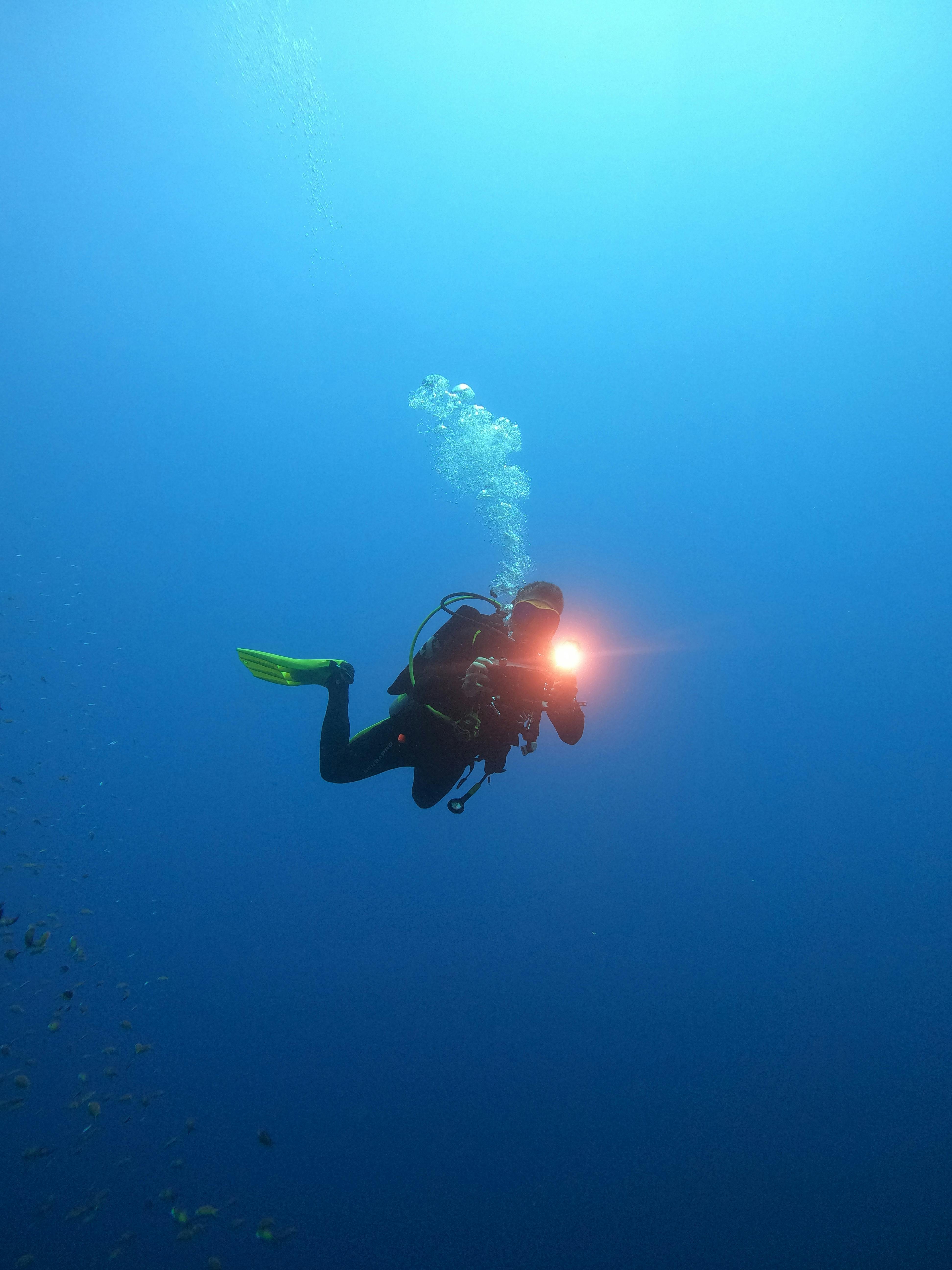
(Image credits: Mo Tawil)
If you think a diving torch is only for night dives, think again. One of the most common mistakes new divers in Singapore make is leaving their torch on the shore during daytime reef dives — and then wondering why the coral looks so grey and flat once they descend past ten metres. The truth is, a dive torch is one of the most versatile and underrated pieces of equipment in your kit bag, and choosing the right one can completely transform how you experience the underwater world.
In this guide, we walk you through everything you need to know about diving torches — why you need one, how to read the spec sheet, which type suits your diving, and what to look for when shopping in Singapore.
Why Colours Disappear Underwater — and Why Your Torch Fixes It
Water acts as a natural colour filter. As you descend, it absorbs different wavelengths of light, stripping away colours one by one. Red starts disappearing at around five metres. Orange fades at about seven metres. Yellow goes at ten metres, and green follows at around twenty metres. By the time you reach thirty metres on a typical reef dive, almost all warm colours have been absorbed, leaving you in a cold blue-green monochrome — even on the sunniest day.
The fix is simple: bring a light source closer to the subject. The shorter the distance between your torch and the reef, the fewer wavelengths get absorbed, and the more vivid the colours appear. Suddenly, that dull brown nudibranch is a brilliant orange. The grey coral fan is deep purple. A torch does not just help you see in the dark — it gives you back the full spectrum of the tropical reef.
Primary vs Backup: Always Carry Two Lights
One of the most important rules in recreational diving is this: always carry a backup torch. No matter how good your primary light is, it can fail — a battery can die mid-dive, a seal can fail, or a switch can stick.
Primary lights are your main workhorse. These are powerful, durable torches you rely on for night dives, wreck penetration, or deep dives. Look for a burn time of at least 90 minutes on a single charge and a switch you can operate comfortably while wearing gloves.
Backup lights are smaller and simpler, designed to get you safely back to the surface or to the exit point if your primary fails. They do not need to be as bright, but they must be reliable.
For recreational diving in Singapore and the surrounding region — sites like Pulau Hantu, Tioman Island, Batam and the Perhentians — a good primary torch plus one compact backup is the standard setup.
Understanding Lumens: How Bright Should Your Torch Be?
Lumens measure the total light output of your torch. For most recreational divers in Singapore and Southeast Asia, a primary torch in the 1,000–1,500 lumen range covers the vast majority of dives. Backup torches typically sit in the 200–500 lumen range.
Beam Type: Spot vs Flood
Beyond lumens, the shape of your beam matters:
Spot beams are narrow and focused, ideal for signalling and picking out specific marine life.
Flood (wide) beams spread light across a broader area, which is better for general illumination during night dives and reduces backscatter in silty or murky conditions.
Depth Rating and Build Quality
Recreational diving typically reaches a maximum of 40 metres, so your torch should be rated well beyond this — ideally to 100 metres or deeper. Ensure the body uses anodised aluminium or high-grade ABS plastic for corrosion resistance.
Battery Type: Rechargeable vs Replaceable
Most modern dive torches use rechargeable lithium-ion battery cells (18650 or 21700), which offer excellent run times and consistent brightness. USB-C charging has become standard, making it convenient to top up between dives.
Caring for Your Dive Torch After Every Dive
1. Rinse in fresh water after every saltwater dive.
2. Dry thoroughly before storing.
3. Lubricate O-rings with silicone grease before every dive (never use petroleum-based lubricants).
4. Store with the battery partially charged to preserve battery health.
5. Test the torch on the surface before every dive.
Choosing Your First Dive Torch in Singapore
Budget starter: 400–800 lumen flood torch. Great for daytime reef dives.
Mid-range all-rounder: 1,000–1,500 lumen primary torch with multiple output modes, paired with a 200–300 lumen backup.
Advanced or photography-focused: 1,800+ lumens, with a wide-angle flood option for video and a technical-grade depth rating.
Visit Dive Box Singapore to browse our full range of diving torches and lights. Our team is happy to help you match the right torch to your diving style and budget.