
The underwater world is poised for another leap forward in 2026 as innovation accelerates across safety, performance, connectivity, and exploration tools. From smarter scuba gear that adapts to your body to robotic assistants and augmented experiences, these advances are reshaping how scuba divers explore the deep blue. Here’s what the scuba community should be watching.
1. Biometric-Enhanced Smart Dive Computers
Gone are the days when a dive computer merely tracked depth and time. Dive computers are expected to integrate biometric sensors that monitor heart rate variability (HRV), skin temperature, and exertion in real time. These physiological inputs will allow dive computers to adjust decompression schedules based on your body’s responses, not just fixed models. This could reduce risk and improve individual safety margins.
This “smart” era means your dive profile won’t just respond to the water—it will respond to you.
2. Next-Gen Rebreather Systems with AI Control
Rebreathers have long been the pinnacle of extended and technical diving. AI-enabled rebreathers that automatically adjust oxygen and inert gas mixes based on depth, breathing patterns, and exertion are emerging. These systems learn over time to optimize gas use and comfort. New units feature real-time multi-sensor safety monitoring, scanning oxygen partial pressure, CO₂ levels, and battery performance, with alarms and displays to keep divers informed.
The integration of AI pushes rebreathers toward safer and more intuitive operation, benefiting technical divers and expedition teams alike.
3. Augmented Reality (AR) and Heads-Up Displays in Dive Masks
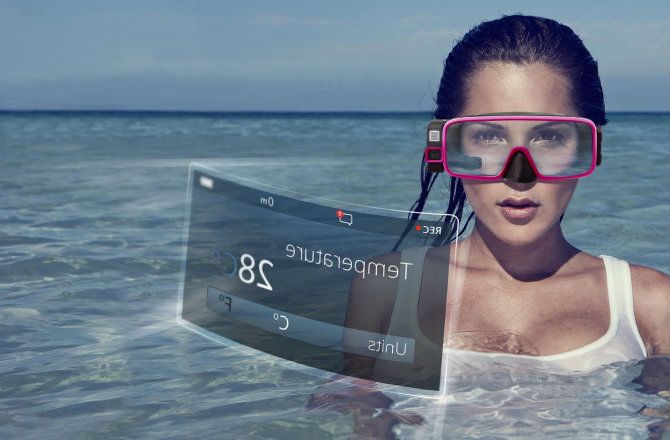
Innovation is bringing the display into your field of vision rather than relegating it to a wrist unit. AR dive masks are being developed that can superimpose navigational cues, depth, air supply, and even species information directly in your view. Beyond data, these displays promise underwater communication functions, potentially showing messages or alerts from dive buddies or surface teams.
This technology could make dives more immersive while reducing the need to constantly glance at separate instruments.
4. ROVs and Robotic Assistants for Divers
Remote and autonomous vehicles are rapidly expanding what’s possible below the surface. Underwater drones (ROVs) allow divers, researchers, and filmmakers to explore deeper, darker, or more hazardous environments from the surface. High-definition cameras and advanced navigation systems make them powerful tools for documentation and research. In parallel, prototype systems are being developed that monitor diver motion and safety, using vision models and robotic systems to detect unusual movement patterns that could indicate distress.
These robotic aids will broaden access to sites previously too risky or inaccessible.
5. Enhanced Communication & Situational Awareness Technologies
Communication and awareness are critical underwater. New solutions are emerging that combine mobile vision-language models with underwater transmissions, enabling more intuitive context-aware messaging between divers. Additionally, integrated tracking and two-way messaging via sound-based sonar systems allow surface support and dive buddies to share location and status in real time.
These tools will improve coordination and safety for recreational, technical, and professional divers.
Conclusion
The trajectory of diving technology in 2026 is all about intelligence, adaptability, and connection—gear that learns from the diver, communicates efficiently, and extends the boundaries of underwater exploration. Whether you’re a recreational adventurer or a technical explorer, these innovations promise to make diving safer, smarter, and more thrilling than ever before.